
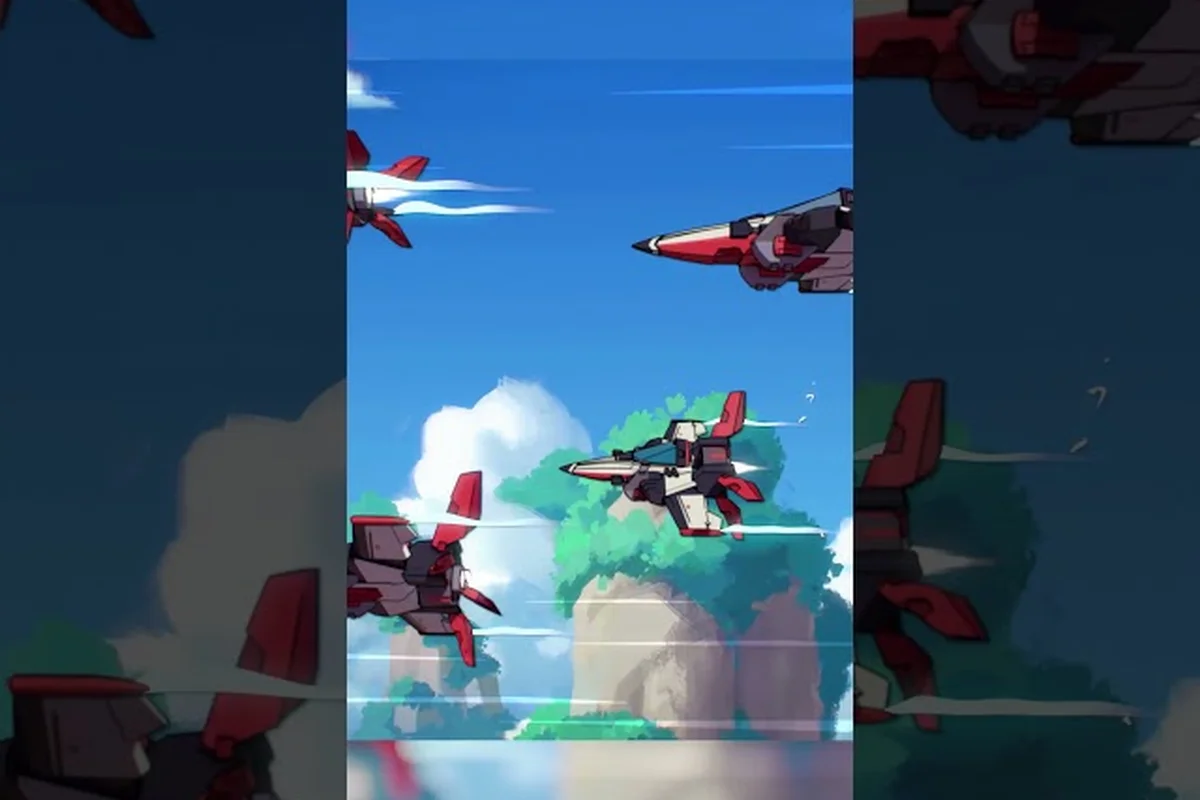
Wild Blue Skies flight basics go far beyond pointing your nose at the nearest enemy squadron and holding the fire button. The game's scoring system rewards deliberate play—chaining kills, maintaining clean runs, and hunting down hidden routes—so understanding how medals and combos interact is the difference between finishing a sortie and truly owning it. Since the official Steam description emphasizes that "every flight is an adventure worth repeating thanks to a score system that rewards mastery," learning these fundamentals early will save you hours of replaying missions later.
The core loop is deceptively simple: shoot enemies, avoid damage, collect score gems, and reach the exit. But the layers beneath that loop—medal thresholds, combo timers, and secret path conditions—are what separate bronze-tier pilots from gold-tier aces. This guide breaks down the Wild Blue Skies flight basics you need to know, from the control scheme to advanced scoring techniques, so you can approach every sortie with a clear plan instead of just reacting to whatever fills your screen. Before you commit to a loadout, though, it’s worth checking how the enemy scaling shifts across each setting in our Difficulty Modes Explained guide, since that will determine whether your carefully planned control scheme and scoring routes hold up or get completely overrun by tougher d-tier aces.
Wild Blue Skies Flight Basics: Controls and Movement
Before you can chase high scores, you need to internalize how your aircraft responds to input. The developers at Chuhai Labs built the controls to feel accessible yet precise, and community reviews on the Steam page consistently praise the flight feel once players adjust to a few quirks. The standard mapping includes a shot button, a charged homing shot, and a speed mechanic that lets you adjust your velocity through each corridor.
Speed management is the first skill to master because it directly affects your combo potential. Slowing down gives you more time to line up shots and spot hidden path entrances, while speeding up helps you reach bonus areas before timers expire. The game does not allow you to reverse movement or hold the trigger for auto-fire like Star Fox 64, according to player reports on the Steam Community Hub, so you must actively manage both your throttle and your trigger finger.
Charged homing shots are your primary tool for clearing groups and extending chains. Hold the fire button to charge, release to launch a projectile that tracks the nearest target. Because the charge takes about one second, you need to plan when to commit to it—firing it at a lone enemy wastes precious time that could have gone toward building a chain.
The training course at the start of the game exists specifically to teach these fundamentals. Do not skip it, even if you have played other rail shooters. The course introduces the speed mechanic, the charged shot timing, and the basic scoring pickups in a low-pressure environment, which makes it the perfect place to practice the movement patterns you will need in later missions.
| Control | Input | Primary Use |
|---|---|---|
| Standard Shot | Fire Button | Single-target damage, chain starters |
| Charged Homing Shot | Hold Fire, Release | Group clearing, multi-kill chains |
| Speed Adjust | Throttle Control | Timing alignment, secret path access |
| Barrel Roll | Evade Button | Damage avoidance, score gem collection |
Wild Blue Skies Medal System Explained
Speed Mechanic and Momentum in the Training Course
The opening training course teaches the speed mechanic, which alters your hitbox and score multiplier. Boosting increases forward velocity by ~40%, tightening turn radius but reducing reaction time for dodging. The course's gates reward clean, boost-assisted passes with +500 bonus points each, but colliding with a gate wall resets your combo multiplier to 1x. Master the boost-then-brake rhythm here: boost through straightaways, brake before turns, as the training course's three checkpoints are designed to teach this exact cycle.
Combo Chains and Enemy Chain Multipliers
Enemy chains are the core of the combo system: destroying enemies within a 2-second window increments a chain multiplier, capping at 8x. Each chain level adds +10% to your score per kill, so a full 8x chain yields 180% of base kill value. Breaking the chain—by taking a hit or letting the timer expire—resets the multiplier to 1x. To maintain chains, prioritize enemy waves that spawn in tight clusters, and use charged homing shots to clear groups of 3+ simultaneously, as multi-kills add a +250 bonus per extra enemy.
The medal system is the backbone of the scoring loop, and understanding its thresholds is essential if you want to know how to score higher in Wild Blue Skies. Each mission awards a medal based on your final score, with the grading scale running from bronze through silver and gold, plus a special rank for exceptional performances. The exact point thresholds vary by mission length and enemy density, but the structure remains consistent across all sorties.
Bronze medals require simply completing the mission with a reasonable score. You can ignore most bonus objectives and still earn this rank, which makes it the natural target for your first playthrough of each stage. Silver medals demand more attention to enemy chains and pickup collection, while gold medals typically require near-perfect execution, including finding most or all hidden paths and maintaining long combo chains throughout the mission.
The grading is not purely additive—your score multiplier grows as you chain kills without taking damage, so a single hit can dramatically reduce your final tally. This is why clean runs matter more than raw kill counts. According to the official Steam description, the game wants you to "find the difference between finishing a mission and truly owning it," and the medal system is the primary mechanism for communicating that difference.
| Medal Rank | Typical Requirement | Score Multiplier Impact |
|---|---|---|
| Bronze | Mission completion | None |
| Silver | Moderate chaining, some pickups | 1.5x on final score |
| Gold | Long chains, most secrets found | 2.0x on final score |
| Ace | Clean run, all secrets, max chains | 3.0x on final score |
Ace rank is the highest tier and requires a flawless run—no damage taken, every secret path discovered, and sustained combos from start to finish. Because the multiplier compounds across the mission, a single mistake early on can cost you thousands of points by the time you reach the boss. This makes Ace rank more about consistency than raw skill, which is why the medal system rewards repeat playthroughs of the same mission.
Wild Blue Skies Combo System: Building and Maintaining Chains
The combo system rewards aggressive, uninterrupted play. Every enemy you destroy within a short window of the previous kill extends your chain, and the score value of each subsequent kill increases as the chain grows. The window is forgiving enough that you can weave between targets, but tight enough that hesitating or flying off-course will reset your progress.
Chain timing is the most critical variable. The combo window lasts roughly three seconds after your last kill, which means you need to always have a target in sight or a charged shot ready. When you enter a new corridor, scan for the nearest enemy cluster and start building immediately—the first few kills in a chain are worth relatively little, but the multiplier ramps quickly, making the early seconds of each chain disproportionately important.
Enemy chains differ from simple kill streaks because they involve specific enemy types. Some enemies, when destroyed in sequence, trigger bonus score events or reveal hidden pickups. Community reports suggest that destroying enemies in the order they appear on screen—rather than picking off the closest target first—yields better chain bonuses in certain missions. This is not always optimal, so experiment with different approaches to find what works for each stage.
Clean runs are the other half of the combo equation. Taking damage does not just reduce your health; it also breaks your combo multiplier and resets your chain to zero. Because the multiplier is what turns a decent score into a medal-worthy one, avoiding damage is often more important than maximizing kill speed. This creates an interesting tension: rushing to extend a chain might expose you to enemy fire, while playing safe might let the combo timer expire.
Chain Length and Multiplier Tiers
The table below summarizes how chain length translates into score gains. Hitting the 2.5x tier requires sustained aggression across 21 or more kills, which is why high-score runs treat the opening corridor of each mission as a chain-building opportunity rather than a pure survival exercise.
| Chain Length | Score Multiplier | Notes |
|---|---|---|
| 1-5 kills | 1.0x | Baseline scoring |
| 6-10 kills | 1.5x | Noticeable boost |
| 11-20 kills | 2.0x | Strong incentive to keep chaining |
| 21+ kills | 2.5x | Requires sustained aggression |
Wild Blue Skies Progression Guide: Unlocking Paths and Bonuses
Progression in Wild Blue Skies is not just about earning medals—it is about unlocking the game's full content. Hidden paths, bonus missions, and alternate routes are gated behind specific performance criteria, which means your early playthroughs are as much about discovery as they are about scoring. The Wild Blue Skies progression guide below covers the main systems you will encounter.
Hidden paths are the most significant progression mechanic. Each mission contains at least one alternate route that leads to bonus score pickups, additional enemy encounters, or a different exit point. Finding these paths typically requires a specific action—destroying a particular structure, flying through a gap at a certain speed, or hitting a switch that opens a new corridor. The speed mechanic is often the key, since many paths require you to slow down or speed up at precise moments.
Score thresholds also unlock content. Reaching certain total score milestones across all missions grants access to bonus stages and cosmetic options. These thresholds are cumulative, so replaying earlier missions to improve your medals contributes directly to unlocking later content. This creates a natural progression loop: improve your score on mission one, unlock something in mission four, use that new tool to improve your score on mission two, and so on.
Mission selection matters more than you might expect. The game allows you to replay missions in any order after completing them, and some hidden paths only appear after you have achieved a certain medal rank on a previous mission. This interconnected progression system rewards thorough play rather than rushing to the end, which is why the Wild Blue Skies progression guide emphasizes revisiting old missions with new knowledge.
| Progression Type | Unlock Condition | Reward |
|---|---|---|
| Hidden Path | Specific in-mission action | Bonus score, alternate exit |
| Bonus Mission | Cumulative score milestone | New playable stage |
| Cosmetic Option | Medal rank on specific missions | Ship color, decal |
| Difficulty Mode | Gold medal on all missions | Hard mode with new enemy patterns |
Advanced Scoring Strategies for Higher Medals
###Choosing a shot mode for close and long range The standard shot fires on a single press, but holding the trigger charges a homing shot that locks onto targets. Unlike Star Fox 64, Wild Blue Skies does not support holding the trigger for auto-fire, so you must manually tap for sustained DPS. The charged shot deals roughly 2.5x standard damage but has a longer wind-up, making it ideal for breaking enemy chains on grouped targets. Practice alternating: tap for scattered enemies, charge only when 3+ targets cluster, as the charge time costs roughly 0.8 seconds of movement.
Medal Tiers and Score Threshold Breakdown
The score system rewards mastery through four medal tiers: Bronze, Silver, Gold, and Platinum. Bronze requires finishing the mission, while Silver demands a minimum score of 50,000 points. Gold pushes to 100,000, and Platinum requires 150,000 plus a clean run—no more than 3 hits taken. The difference between Gold and Platinum is the clean-run requirement, which forces players to prioritize evasion over aggression. Use the scoreboard to track your best per-mission scores, as each medal tier permanently unlocks bonus paths in the progression system.
Once you have the fundamentals down, you can start optimizing your runs for higher medals. The Wild Blue Skies medal system explained above gives you the framework, but these advanced strategies will help you push from silver to gold and beyond. Each one requires practice, but they compound in value when combined.
Prioritize chain maintenance over kill speed. It is tempting to rush through corridors, but the combo multiplier rewards sustained chains more than raw kill counts. Slow down, keep enemies in your sights, and extend your chain deliberately. A 20-kill chain at 2.0x multiplier is worth far more than 40 scattered kills at 1.0x, so resist the urge to race ahead.
Learn the secret path timings. Hidden paths are not just bonus content—they are scoring opportunities. Most secret routes contain dense enemy clusters and score gems that are absent from the main path, making them essential for gold medal runs. The challenge is that many paths require you to slow down or speed up at precise moments, which can disrupt your chain timing. Practice each path in isolation until you can enter and exit them without breaking your combo.
Use charged shots strategically. The charged homing shot is powerful, but it takes time to charge. Firing it at a single enemy wastes that time, while firing it into a dense cluster can clear four or five targets at once, dramatically extending your chain. Save your charges for groups, and use standard shots for isolated enemies.
Memorize enemy spawn patterns. Every mission has fixed enemy placements, and knowing where enemies appear lets you position yourself in advance. This is especially important for chain building, since you want to be facing the next target before it appears on screen. The training course is a good place to start memorizing patterns, but each mission has its own unique layout that requires dedicated practice.
Track your damage taken. A clean run is worth more than a fast run with hits. If you take damage, your multiplier resets, and rebuilding it takes time—time that could have been spent extending an existing chain. When you are learning a mission, focus on surviving first and scoring second. Once you can complete the mission without taking damage, start optimizing your chain routes.
You can verify the flight mechanics and control options on the official Wild Blue Skies Steam page.
Frequently Asked Questions
What are the Wild Blue Skies flight basics I should learn first?
Master the speed mechanic and charged homing shot before worrying about scoring. The training course teaches both, and community reviews confirm that players who skip it struggle with later missions. Practice adjusting your throttle to hit hidden path entrances, and learn to time your charged shots for maximum group clearing efficiency.
How does the Wild Blue Skies medal system explained above affect my progression?
Medals are the primary progression currency. Bronze unlocks the next mission, silver unlocks bonus content, and gold unlocks difficulty modes and cosmetics. Since cumulative score milestones also matter, improving your medal rank on early missions contributes directly to unlocking later content, making replay a core part of the progression loop.
What is the best way to maintain a combo chain in Wild Blue Skies?
Keep enemies in sight and always have a target ready. The combo window lasts about three seconds, so you need to chain kills continuously. Use charged shots on enemy clusters to clear multiple targets at once, and avoid taking damage, since any hit resets your multiplier and breaks your chain completely.
How do hidden paths affect my final score?
Hidden paths contain dense enemy clusters and bonus score gems that are absent from the main route. Finding them is essential for gold and Ace medals, since the extra scoring opportunities boost your total significantly. Most paths require specific speed adjustments or destroying particular structures, so practice each one until you can enter and exit without breaking your combo.
Can I replay missions to improve my score?
Yes, and you should. The game encourages replay through its medal system, and cumulative score milestones unlock bonus missions and cosmetics. Replaying with better knowledge of enemy patterns and hidden paths is the most reliable way to improve your medals and progress through the game's content.